
 0844 963 3040
Infrastructure Planning Starts Earlier Than You Think: Why Early Coordination Delivers Better Projects
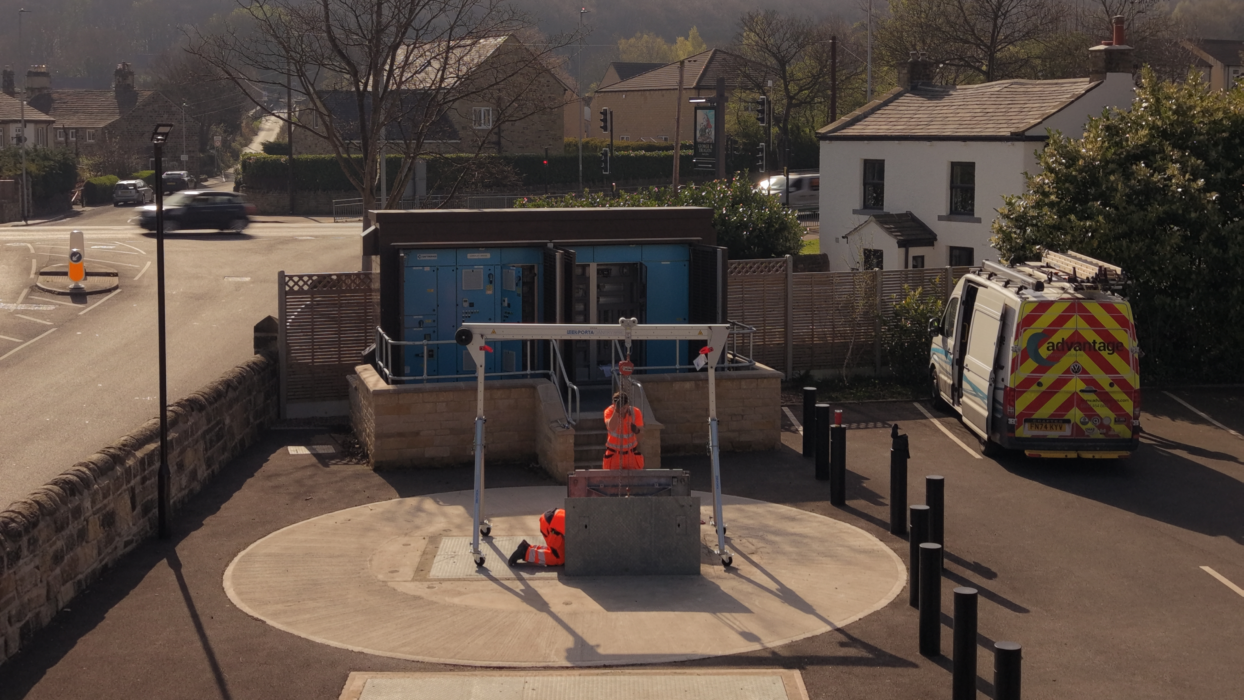
As pressure grows to deliver more homes, improve infrastructure and accelerate construction programmes, early technical coordination has become one of the most valuable tools available to developers, consultants and contractors. We explore why infrastructure planning should begin long before construction starts—and how bringing the right expertise into a project early can reduce risk, improve coordination and support better long-term outcomes.
Good Projects Rarely Happen by Accident
Across the construction industry, there is understandable focus on planning permission, procurement, budgets and programme delivery.
Yet one of the biggest contributors to a successful development often receives far less attention.
Early infrastructure planning.
Whether delivering a residential development, commercial scheme or major infrastructure project, the projects that progress most smoothly are rarely the simplest. More often, they’re the ones where technical coordination begins before individual work packages develop independently.
Pumping stations are a good example.
They may represent only a small proportion of the overall project value, but they often sit at the intersection of multiple disciplines. Civil engineering, drainage design, utilities, highways, mechanical and electrical installation, environmental requirements and future maintenance all influence how the final solution should be developed.
When these disciplines work together from the outset, projects generally benefit from greater certainty. When they don’t, even relatively straightforward schemes can experience unnecessary redesign, approval delays or installation challenges.
This is why early infrastructure planning is becoming increasingly important—not just for pumping stations, but for the overall success of a development.
Planning Permission Is the Starting Point, Not the Finish Line
Receiving planning consent is an important milestone, but it’s only the beginning of the technical delivery phase.
Once permission has been granted, the questions become much more practical.
• How will drainage infrastructure integrate with the wider site?
• Have future adoption requirements been considered?
• Can maintenance vehicles safely access the pumping station?
• Are proposed levels practical for construction?
• Will civil and M&E works align during delivery?
• Has sufficient allowance been made for future operation and maintenance?
These are questions that become increasingly expensive to answer once construction has started.
Projects that consider these issues during technical design rather than during installation are often better placed to maintain programme certainty throughout delivery.
It’s a topic we’ve explored previously in Why Pump Station Approvals Get Delayed (And How to Keep Them Moving), where we discuss how early design coordination can reduce unnecessary approval revisions and help projects progress more efficiently.
Likewise, our article Building for Adoption: What Housebuilders Should Consider Before Construction Starts explains why adoption shouldn’t be viewed as the final stage of a project, but as something that influences decisions from the very beginning.
By treating infrastructure planning as an ongoing process rather than a single milestone, project teams create far greater flexibility to resolve technical challenges before they affect the wider programme.
Infrastructure No Longer Exists in Isolation
Construction projects have become significantly more integrated over the last decade.
Drainage infrastructure can no longer be considered as a standalone package delivered independently of the wider development.
Today’s projects require pumping systems to interact successfully with multiple disciplines simultaneously, including:
• Surface water management strategies
• Highway drainage networks
• Environmental requirements
• Utility coordination
• Mechanical and electrical infrastructure
• Asset ownership and future maintenance
• Water authority adoption requirements
Each of these areas influences the others.
For example, relocating a pumping station to accommodate another element of the development may appear straightforward during design, but could affect maintenance access, pipe gradients, storage calculations or future adoption requirements if considered in isolation.
This interconnected approach is particularly evident on phased developments and constrained sites, where individual design decisions often have wider consequences across the project.
Our recent article Pump Stations on Complex Sites: Designing Around Constraints, Not Against Them explores how successful projects begin by understanding site constraints first, before developing solutions that work around them.
Rather than asking, “How do we fit the pumping station into the design?” the better question is often:
“How should the design evolve to accommodate the infrastructure that the development depends upon?”
That subtle shift in thinking frequently results in a more coordinated and more deliverable scheme.
Infrastructure Projects Demand More Than Equipment
Flood resilience projects often involve:
• Multiple stakeholders
• Complex approvals
• Challenging site conditions
• Operational environments
• Strict programme requirements
• Successful delivery therefore relies on more than selecting pumps and controls.
It requires technical expertise, coordination, and a clear understanding of how the pumping infrastructure integrates into the wider scheme.
Programme Certainty Is Becoming More Valuable Than Lowest Cost
Construction has always balanced programme, quality and cost.
Today, programme certainty is arguably becoming the most valuable of the three.
Labour shortages, material availability, planning reform and increasing delivery targets mean that avoiding disruption is often worth considerably more than making small savings during specification.
This is particularly true for infrastructure.
A pumping station that requires redesign after construction has started doesn’t simply affect one package. It can influence drainage works, highways, utility installations, surfacing, commissioning and ultimately site completion.
In many cases, the cost of delay far outweighs the difference between two technical solutions.
That’s why we encourage clients to consider the whole-life value of pumping infrastructure rather than focusing solely on initial capital cost.
The most effective solution is rarely the cheapest on day one.
Instead, it’s the solution that:
• integrates successfully with the wider development
• supports a smooth approval process
• minimises installation risk
• performs reliably throughout its operational life
• remains practical to maintain for future asset owners
This philosophy underpins much of our previous technical guidance, including The True Cost of a Pump Station: Upfront vs Lifetime Costs and The Impact of Poorly Designed Pump Stations on Long-Term Costs, both of which explore how early design decisions continue to influence project performance long after construction has been completed.
Increasingly, successful projects are recognising that investing time in early technical coordination isn’t an additional cost—it’s an investment in programme certainty.
Collaboration Is Becoming the Competitive Advantage
One of the biggest changes we’ve seen across the construction industry isn’t necessarily technical—it’s cultural.
Increasingly, successful projects are built around collaboration rather than sequential delivery.
Rather than treating consultants, contractors, groundworkers and specialist suppliers as isolated disciplines, project teams are recognising the value of involving technical expertise earlier, allowing practical considerations to influence design while there is still flexibility to make informed decisions.
For pumping infrastructure, that often means discussing:
• installation sequencing
• maintenance access
• telemetry requirements
• future adoption
• commissioning responsibilities
• operational resilience
long before equipment arrives on site.
The outcome isn’t simply a better pumping station.
It’s a project where fewer assumptions are made, responsibilities are clearer, and technical decisions support the wider delivery programme rather than creating challenges later.
This collaborative approach also helps bridge one of the most common causes of delay—the transition between civil engineering works and mechanical and electrical installation.
Our article How to Ensure a Smooth Transition Between Civil & M&E Works explores this in greater detail, highlighting why early coordination between disciplines often determines how smoothly installation progresses.
Different Projects. The Same Lessons.
Although every project is different, certain themes appear time and again.
Over the last two decades we’ve supported projects ranging from residential housing developments through to critical infrastructure, and while the environments differ significantly, the underlying principles remain remarkably consistent.
Residential developments such as Lovell Homes – South Otterington and Foxes Chase demonstrate the value of aligning pumping station design with adoption requirements from the earliest stages of the project.
By coordinating technical requirements before construction progressed, the projects were positioned for smoother approvals, more efficient installation and a clearer route through to adoption.
At the other end of the spectrum, infrastructure schemes such as the Leeds Flood Alleviation Scheme Phase 2 and Network Rail – Goole Station Subways presented a very different set of challenges.
Multiple stakeholders.
Complex operational environments.
Restricted access.
Programme constraints.
Critical performance requirements.
Yet despite these differences, the same principles applied.
Early technical coordination.
Clear communication.
Practical design.
Collaborative delivery.
The scale of the project changed.
The importance of these fundamentals did not.
Designing Infrastructure That Performs Beyond Handover
One observation that has become increasingly important is the industry’s shift towards whole-life thinking.
Today, clients are rightly asking different questions.
Rather than focusing solely on specification or installation, they are considering:
• How will this asset perform in ten years’ time?
• Is maintenance practical?
• Will the system remain reliable as demand changes?
• Can future engineers access critical components safely?
• Has operational resilience been considered?
These questions are shaping better infrastructure.
The most effective pumping systems are no longer judged solely on whether they function correctly on the day of commissioning.
They’re assessed on how reliably they continue to operate throughout their operational life.
This philosophy aligns closely with our previous articles:
Mechanical & Electrical Maintenance: Why It’s Crucial for Long-Term Performance
The Impact of Poorly Designed Pump Stations on Long-Term Costs
The True Cost of a Pump Station: Upfront vs Lifetime Costs
Collectively, they reinforce a simple message:
Good infrastructure is designed for operation—not just installation.
The Earlier the Conversation, the Greater the Opportunity
Perhaps the biggest opportunity lies in changing when conversations happen.
By involving specialist expertise earlier, project teams gain greater flexibility to make informed decisions while options remain open.
That benefits everyone involved.
Housebuilders gain greater programme certainty.
Consultants develop more coordinated designs.
Groundworkers experience fewer installation issues.
Contractors reduce interface risks.
Future operators inherit infrastructure that has been designed with maintenance and resilience in mind.
Early coordination doesn’t eliminate every challenge.
Construction projects will always evolve.
However, it gives teams the opportunity to resolve many issues before they become expensive or disruptive.
In our experience, that’s often where the greatest value is created.
Looking Ahead
The construction industry continues to evolve.
Pressure to deliver more homes, improve infrastructure resilience and meet increasingly demanding environmental expectations means projects will only become more interconnected.
At the same time, clients are expecting greater certainty around programme, cost and long-term asset performance.
Meeting those expectations will require closer collaboration between developers, consultants, contractors and specialist suppliers than ever before.
Infrastructure planning can no longer be viewed as a standalone exercise.
It is an integral part of delivering successful projects.
Those that embrace early technical coordination are likely to experience fewer surprises, stronger project outcomes and infrastructure that continues to perform long after handover.
Why Choose Advantage Pumping Solutions?
At Advantage Pumping Solutions, we believe the best pumping systems are the result of practical engineering, collaborative working and informed decision-making.
Rather than simply supplying equipment, we work alongside housebuilders, consultants, contractors and infrastructure teams from the earliest stages of a project—helping ensure pumping systems are practical to deliver, aligned with project objectives and designed for long-term performance.
Our manufacturer-independent approach allows us to specify the most appropriate components for every application, while our structured delivery process supports projects from initial technical discussions through to commissioning, handover and ongoing operational support.
Whether we’re supporting a residential development, a commercial scheme or a major infrastructure project, our objective remains the same:
To provide practical technical expertise that reduces risk, improves coordination and helps keep projects moving.
Let’s Talk
Planning a residential development, commercial project or major infrastructure scheme?
Talk to Advantage Pumping Solutions early in the design process to discover how collaborative technical input can improve coordination, reduce project risk and support successful delivery from concept through to commissioning.
Whether you need advice on adoption, infrastructure planning or pumping station design, our experienced team is here to help.