
 0844 963 3040
Five Lessons We’ve Learned Delivering Pumping Infrastructure on Complex Projects
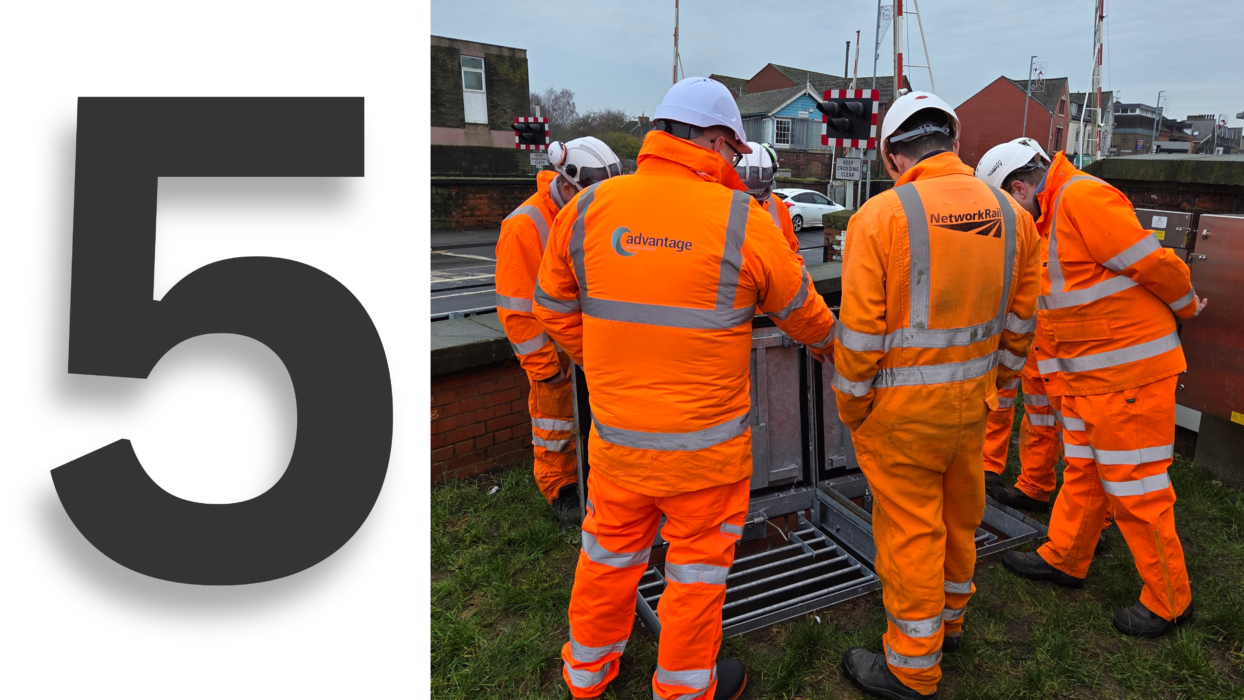
Every project presents its own technical challenges, site constraints and stakeholder requirements. Yet after supporting pumping infrastructure across residential developments, transport projects, flood alleviation schemes and major civil engineering works, we’ve noticed that many of the same lessons continue to emerge. Here are five observations that consistently make the biggest difference to successful project delivery.
Experience Doesn’t Eliminate Challenges—It Changes How You Respond to Them
Complex projects are rarely defined by a single technical problem.
More often, they’re shaped by hundreds of small decisions made throughout the design, construction and commissioning process.
A change in ground conditions.
A revised programme.
A new stakeholder requirement.
Restricted access to part of the site.
An unforeseen interface between two contractors.
Individually, none of these challenges are unusual.
Collectively, however, they can influence programme certainty, installation quality and long-term asset performance if they aren’t managed effectively.
One thing we’ve learned over the years is that successful projects don’t avoid challenges altogether.
They create processes that allow those challenges to be identified early, discussed openly and resolved collaboratively.
Whether supporting residential developments or a major infrastructure schemes, that principle rarely changes.
Lesson One: Technical Coordination Is More Important Than Technical Complexity
When people think about complex pumping infrastructure, it’s natural to assume the biggest challenge lies in the engineering.
In reality, the engineering is often the straightforward part.
The greater challenge is ensuring that everyone involved in the project is working towards the same objective.
A pumping station rarely exists in isolation.
It connects with:
• Civil engineering works
• Drainage design
• Highways
• Electrical infrastructure
• Utility providers
• Environmental requirements
• Water authority standards
• Future operational responsibilities
Each discipline influences the others.
When communication between those teams happens early, projects generally progress with fewer surprises.
When it doesn’t, even relatively simple installations can become unnecessarily complicated.
This is why technical coordination has become such an important part of modern project delivery.
Our article Infrastructure Planning Starts Earlier Than You Think explores how involving technical specialists during the design stage can improve coordination across the entire development.
Likewise, How to Ensure a Smooth Transition Between Civil & M&E Works examines one of the most common interface challenges encountered during construction.
Lesson Two: Every Site Should Influence the Design
Standardisation has an important role to play within construction.
However, one of the biggest lessons we’ve learned is that successful projects rarely rely on a standard solution alone.
Every site presents different constraints.
Ground conditions.
Topography.
Available footprint.
Access routes.
Maintenance requirements.
Existing infrastructure.
Stakeholder expectations.
The role of the designer is not simply to find equipment that meets a specification.
It’s to understand how those constraints influence the most appropriate solution.
This is one of the reasons manufacturer independence remains so valuable.
Rather than designing around a fixed product range, projects benefit from selecting the most appropriate pumps, controls and ancillary equipment for the specific application.
That flexibility allows systems to be developed around the needs of the project rather than adapting the project to suit predefined equipment.
We’ve explored this philosophy further in Pump Stations on Complex Sites: Designing Around Constraints, Not Against Them, where we discuss why understanding site constraints early often leads to simpler, more practical solutions.
Lesson Three: Programme Pressure Changes Everything
Construction programmes have always been demanding.
Today’s projects, however, are often expected to achieve more within tighter timescales while coordinating an increasing number of stakeholders and specialist contractors.
Under these conditions, technical decisions become closely linked to programme performance.
Small delays in approvals can affect procurement.
Installation sequencing can influence multiple trades.
Late design revisions may impact commissioning.
These aren’t isolated technical issues—they affect the wider project.
That’s why successful pumping infrastructure isn’t simply designed to meet performance criteria.
It should also be designed to support efficient delivery.
Early design reviews, practical installation planning and clear communication between project teams all contribute towards maintaining programme certainty.
As discussed in Reducing Project Delays with Expert Pump Station Design, many of the issues encountered during construction originate much earlier in the project lifecycle.
Investing time in technical coordination before construction begins often reduces disruption later.
Lesson Four: Good Infrastructure Is Designed for Operation, Not Just Installation
A pumping station may only take a matter of weeks to install.
It could remain in service for decades.
That simple fact fundamentally changes how successful projects should be designed.
While installation is naturally a key milestone, commissioning is not the finish line. It is the point at which responsibility begins to shift towards long-term operation, maintenance and asset performance.
The most effective pumping stations are therefore designed with future operators in mind from the outset.
Questions such as these should influence the design long before equipment arrives on site:
• Can maintenance engineers safely access critical components?
• Has lifting equipment been considered?
• Is isolation practical during servicing?
• Can telemetry provide meaningful operational information?
• Will routine maintenance be straightforward to carry out?
• Has resilience been designed into the system should components fail?
These considerations rarely change the purpose of the pumping station.
They change how easy it is to own.
Increasingly, clients are recognising that whole-life performance represents far greater value than simply achieving compliance at installation.
This thinking aligns closely with several of our previous technical articles, including:
• Mechanical & Electrical Maintenance: Why It’s Crucial for Long-Term Performance
• The Impact of Poorly Designed Pump Stations on Long-Term Costs
• The True Cost of a Pump Station: Upfront vs Lifetime Costs
Each reinforces the same principle:
Infrastructure should be judged not simply on how well it performs during commissioning, but on how reliably it continues to operate throughout its working life.
Lesson Five: Successful Projects Are Built on Relationships
Perhaps the most valuable lesson we’ve learned isn’t technical at all.
Successful projects are almost always built on strong relationships.
No matter how well engineered a pumping station may be, its success ultimately depends upon collaboration between the people responsible for delivering it.
Developers.
Consultants.
Groundworkers.
Civil engineers.
Mechanical and electrical contractors.
Water authorities.
Future operators.
Each has different priorities.
Each brings different expertise.
The best outcomes happen when those perspectives come together early rather than independently.
We’ve found that many project risks can be reduced simply by encouraging conversations earlier in the programme.
Clarifying responsibilities.
Reviewing assumptions.
Sharing technical knowledge.
Understanding site constraints together.
It sounds simple.
Often, it is.
Yet those discussions frequently prevent far larger issues emerging later during construction.
As projects become larger, faster paced and increasingly collaborative, technical expertise becomes as much about communication as engineering.
Different Projects. The Same Principles.
Although every project brings unique challenges, it’s striking how often the same lessons apply.
On residential developments such as Lovell Homes – South Otterington, early coordination between technical teams helped align pumping station design with adoption requirements, reducing the potential for delays later in the programme.
At Foxes Chase, collaboration throughout design and delivery supported the successful integration of adoptable foul and surface water pumping stations while maintaining focus on programme and compliance.
The same philosophy extends into more technically demanding environments.
Our work supporting the Leeds Flood Alleviation Scheme Phase 2 required coordination across multiple pumping stations operating as part of a wider flood defence network, involving several stakeholders and carefully managed delivery interfaces.
Similarly, the Network Rail – Goole Station Subways project demonstrated the importance of detailed planning within an operational environment, where night-time working, restricted access and carefully managed programmes demanded close collaboration throughout delivery.
Different sectors.
Different stakeholders.
Different technical requirements.
Yet the same fundamentals continued to underpin successful delivery:
• Early technical engagement
• Practical engineering
• Clear communication
• Collaborative problem solving
• Long-term thinking
These aren’t project-specific observations.
They’re principles we’ve seen repeated across every sector we’ve worked in.
Looking Beyond the Pumping Station
One of the biggest shifts we’re seeing across the industry is that clients are increasingly evaluating suppliers on the value they bring to the wider project—not simply the products they provide.
That means understanding programme pressures.
Recognising construction constraints.
Supporting coordination between disciplines.
Helping identify risks before they affect delivery.
Providing practical technical advice that improves decision-making.
In many respects, the pumping station itself becomes only one part of the conversation.
The greater value comes from helping projects move forward with confidence.
As construction becomes increasingly collaborative, this broader role will only become more important.
Looking Ahead
The projects of the future will continue to become more complex.
Housing delivery targets, climate resilience, ageing infrastructure and increasing stakeholder expectations will place greater emphasis on technical coordination than ever before.
While technology will undoubtedly continue to evolve, many of the fundamentals are unlikely to change.
Projects that encourage early collaboration.
Design around real site constraints.
Consider long-term operational performance.
And involve specialist expertise before challenges emerge.
Those projects are consistently better positioned to deliver successful outcomes.
After supporting projects across residential developments, commercial sites, transport infrastructure and flood alleviation schemes, those remain the lessons that continue to matter most.
Why Choose Advantage Pumping Solutions?
At Advantage Pumping Solutions, we believe successful projects begin long before installation.
By working alongside housebuilders, consultants and contractors from the earliest stages of a project, we help develop pumping systems that are practical to deliver, aligned with programme requirements and designed for reliable long-term performance.
Our manufacturer-independent approach allows us to recommend the most appropriate solution for each individual project, while our structured delivery process supports clients from early technical discussions through to commissioning and handover.
Whether we’re supporting a residential development, transport project or critical infrastructure scheme, our objective remains the same:
To provide practical engineering expertise that reduces risk, improves coordination and helps projects progress with confidence.
Let’s Talk
Every project is different.
But the principles behind successful delivery remain remarkably consistent.
If you’re planning a residential development, commercial scheme or major infrastructure project, our team is always happy to discuss your requirements, review technical challenges and share practical advice based on real project experience.
Get in touch with Advantage Pumping Solutions to discover how early technical collaboration can help reduce risk and support successful project delivery from concept through to commissioning.